
How Housebuilders Can Capitalise on the Future Homes Standard’s Solar Push
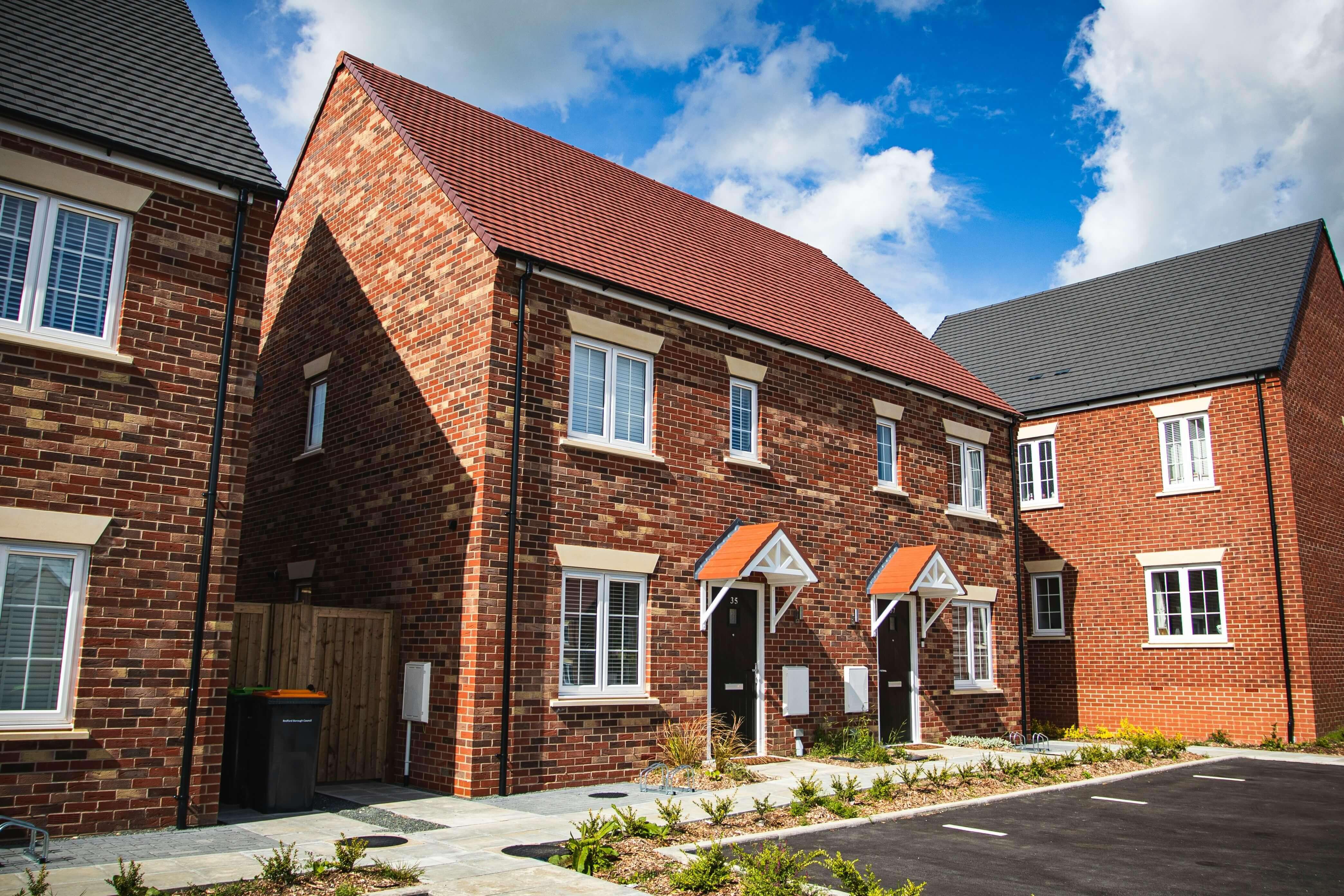
If you’re building homes in the UK right now, it probably feels like the rules are shifting under your feet.
In many ways, they are.
The Future Homes Standard (FHS) is now published, and while the detailed technical guidance is still being finalised, the direction of travel is becoming clear: homes are expected to be far more energy efficient, low-carbon and, crucially, equipped with renewable generation like solar photovoltaic (PV) technology.
For housebuilders, this isn’t just another compliance update to tick off. It’s a major change in how homes are designed, built and sold.
The good news? If you approach it properly, solar isn’t a cost burden. It’s a design tool, a marketing advantage, and a way to future-proof your developments in one go.
Let’s break down what’s actually changing – and what you need to do about it.
First, what’s actually happening with regulation?
The Future Homes Standard sets a clear ambition: the majority of new homes must deliver around 75–80% lower carbon emissions compared to 2013 standards.
In practice, that means two big shifts:
- Homes must be extremely energy efficient (better insulation, airtightness, heating systems)
- A large share of remaining energy demand is expected to be offset by on-site renewables, mainly solar PV
Government consultations have referenced mandating solar coverage equivalent to around 40% of a home’s ground-floor area, although this figure may evolve, with only limited exemptions where installation is genuinely impractical.
So while there will be some exceptions, the baseline expectation is simple: if you’re building a new home, you should assume it will have solar.
The compliance model is also evolving – and optimised solar performs better within it
Alongside the Future Homes Standard (FHS), the UK is transitioning from the long-established SAP methodology to a new framework: the Home Energy Model (HEM).
This change is significant because HEM is fundamentally different from SAP in how it assesses building performance. SAP relies on simplified assumptions and monthly averages to model energy use across a home, whereas HEM uses far more detailed, time-based and system-specific modelling to reflect how buildings actually perform in real-world conditions.
For solar in particular, this shift means performance is no longer estimated using broad averages, but is instead assessed in a more granular way that captures how systems operate in practice, including factors such as:
-
inverter sizing relative to panel capacity
-
clipping losses
-
real-world inverter efficiency under varying conditions
-
system orientation and shading impacts
-
time-based energy generation and household demand
This will have important implications for solar technology selection. Systems that are designed to optimise performance at the panel level – such as those using Power Optimizer technology – will be accurately represented under HEM.
In practical terms, this means optimised solar systems are likely to contribute more effectively towards the required 75–80% reduction in carbon emissions, helping housebuilders meet targets with greater confidence.
The government has confirmed that HEM will be introduced in the near future. However, SAP 10.3 will remain in place during a transition period, meaning housebuilders will need to consider both methodologies in the short term.
Why optimised solar systems have become an industry standard
For those already familiar with solar technology, this shift won’t come as a surprise. Long before the Future Homes Standard or the Home Energy Model entered the picture, optimised solar systems were rapidly becoming the technology of choice for both residential and industrial customers. The reason is simple: they solve real-world problems that traditional, non-optimised string inverter systems have always struggled with.
In traditional systems, solar panels are connected together in a single “string” and are linked to a central inverter. That inverter converts the DC electricity generated by the panels into usable AC electricity for the home.
On paper, it’s a straightforward and proven approach. In practice, it comes with a key limitation: the panels are electrically dependent on each other. In effect, they behave as one combined system rather than individual units. This means that if one panel underperforms – due to shading, dirt, or even a slightly different orientation – the performance of the entire string is reduced, which can severely reduce energy production.
It also places constraints on system design. Panels within a string must be installed at exactly the same pitch and orientation to operate efficiently. This often leads to compromises such as:
-
underutilised roof space
-
reduced system size
-
design adjustments made to suit the technology rather than the architecture
For housebuilders working at scale, that’s not an ideal position. It introduces friction between what the developer wants to achieve and what the technology allows.
This is where SolarEdge changes the game
SolarEdge DC-optimised technology was designed specifically to address these challenges.
Instead of treating a solar array as one connected system, SolarEdge technology uses Power Optimizers attached to each solar panel to allow them to operate independently.
In practical terms, that means:
-
panels on different roof faces can all perform effectively
-
shading or soiling on one panel doesn’t reduce output from the rest
-
irregular roof layouts become fully usable
-
system design no longer dictates architectural compromises
For housebuilders, that translates into something very practical: it means they don’t need to redesign homes around solar. The solar adapts to the homes.
At scale, that’s a big deal. It means housebuilders can standardise a single solar technology across every new home they build, removing unnecessary complexity and streamlining delivery across their sites.
Safety and compliance are becoming central considerations
DC-optimised solar technology is also increasingly aligned with the industry’s growing focus on safety, performance and compliance. In housebuilding, any safety-related issue can have long-term consequences, so technology choices need to reflect a safety-first approach.
SolarEdge’s DC-optimised solution is designed with this in mind. By integrating a suite of advanced safety functionality directly into the system architecture, rather than relying on additional external devices, it helps reduce installation complexity and minimise potential points of failure.
Key features include:
-
SafeDC™: designed to automatically reduce array voltage to touch-safe levels when the system is shut down, providing safe roof access to firefighters and maintenance teams.
-
Sense Connect™ arc fault prevention at the connector level: designed to continuously monitor and identify abnormal heat buildup before it escalates into an electric arc.
-
Automatic pre-production safety checks such as isolation and grid connection tests, to ensure all connections and functions are operating correctly prior to production.
SolarEdge is widely recognised as a leader in solar safety, with independent validation and recognition from bodies such as VDE and Zurich, and global adoption across major organisations, including 50% of Fortune 100 companies.
The bottom line
Solar is no longer an optional extra in UK housing development. It is positioned to soon be a default requirement shaped by regulation.
While it may be tempting to wait until deadline draws closer before taking action, early movers stand to gain many advantages. By securing technology choices, installer capacity and supply chains ahead of full implementation, housebuilders can avoid bottlenecks, possible rising costs and reduced flexibility as demand accelerates.
There are also additional benefits to consider. Having a solar system installed can enhance a property’s appeal to prospective buyers. Research from the Home Builders Federation shows that new-build homes save homeowners an average of £420 per year to older properties, driven by improved fabric efficiency and onsite generation. Accordingly, energy efficiency is now a key purchase driver, with 24% of buyers stating it is “crucial” to their next home move.
Solar also opens the door for housebuilders to generate new revenue streams. While solar is expected to be mandatory under regulations, complementary technologies are evolving at different speeds. Air source heat pumps are rapidly becoming the heating solution of choice for new-build homes, as regulatory direction continues to favour low‑carbon heating systems over traditional fossil fuel solutions such as gas boilers, positioning them as the new standard rather than an optional upgrade.
Alongside this, technologies such as battery storage systems continue to present a significant commercial opportunity. Homeowners increasingly value greater energy independence and control, and many housebuilders are already positioning battery storage as a high-margin upgrade – the modern equivalent of premium kitchens or flooring packages. While fewer than 10% of new homes currently have battery storage installed, over 70% are battery-ready, with space, cabling and capacity allowed for, leaving potential for housebuilders to offer high-margin add-ons.
For housebuilders, the opportunity is clear. Those who treat solar as a core consideration, not an afterthought, are expected to:
-
reduce compliance friction
-
improve site efficiency
-
strengthen sales propositions
-
and future-proof their developments
Ultimately, the question is not whether solar becomes standard on new homes, but how well prepared you are when it does. on energy bills compared
Discover. Stay Competitive. Connect.
Speak to our local sales team for expert advise.
Discover. Stay Competitive. Connect.
Speak to our local sales team for expert advise.


