
Maximizing System Savings with Centralized Configurations for SolarEdge Carport and Parking Lot Solar Panel Projects

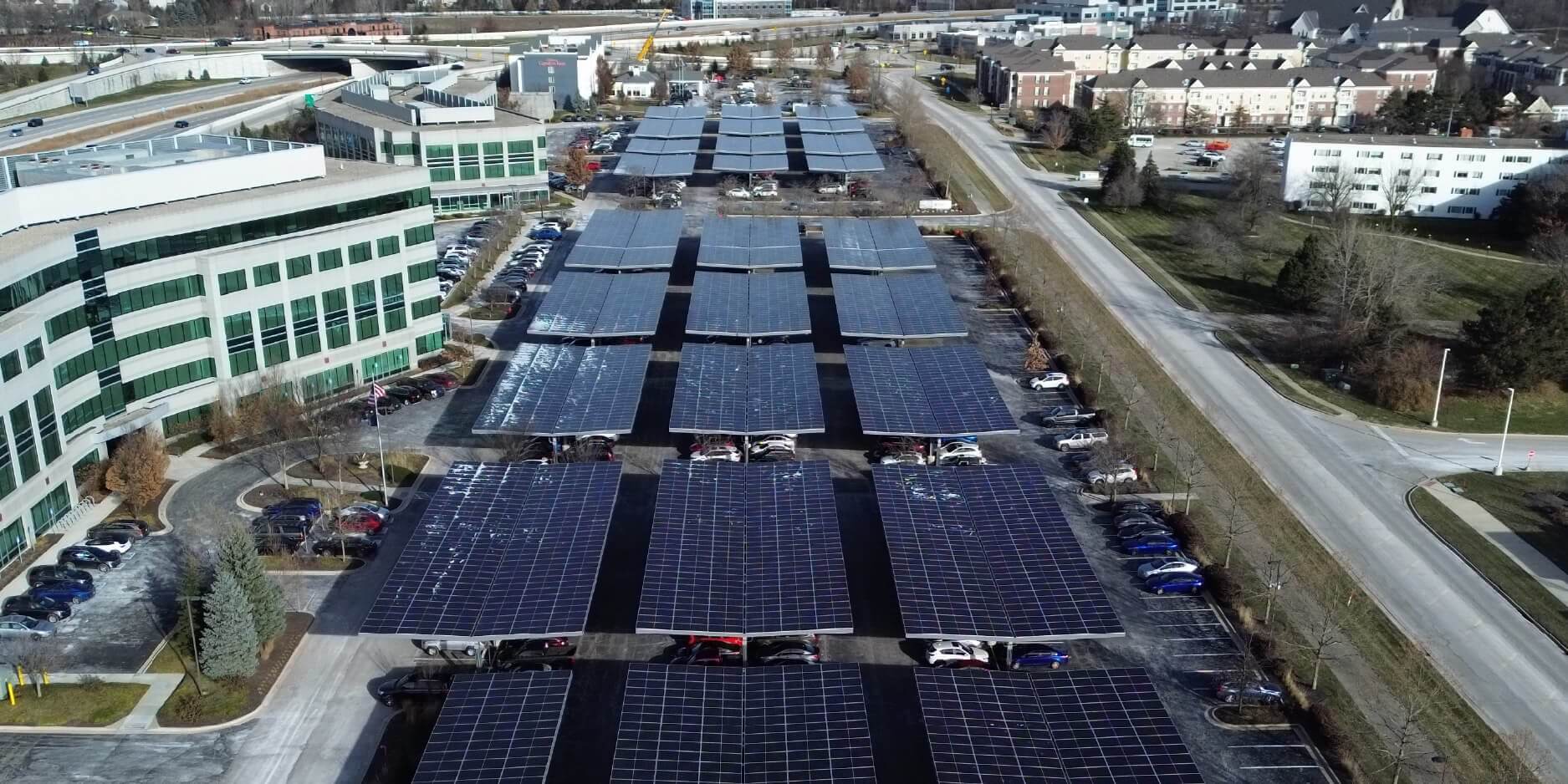
Centralized Layouts for Commercial Solar Help Save Cost, Installation Time, and O&M Labor
Centralized inverter configurations are revolutionizing how commercial solar systems—especially carports and parking lot solar panel installations—are deployed. By locating PV inverters in a central area, developers can improve cost efficiency, streamline maintenance, and enhance solar safety.
This architecture aligns perfectly with SolarEdge’s DC-optimized approach, enabling lower system costs and higher performance. From planning to operations, centralized configurations support better logistics, security, and long-term reliability.
This setup also minimizes the communication infrastructure. Another key advantage is the protection against vandalism, as centralized equipment can be more easily secured compared to distributed setups. Centralized setups also offer easier installation, as equipment is concentrated in one location, streamlining logistics and reducing labor complexity during deployment.
From a cost and design standpoint, centralized configurations help reduce expenses related to cabling and disconnects. Shorter AC output circuits lower overall cabling costs, and the need for inverter-level AC or DC disconnects can often be eliminated. When inverters are installed adjacent to the AC combiner panel and its breakers, AC disconnects can be avoided. Moreover, systems like SolarEdge with SafeDCTM eliminate the need for DC Disconnects in DC combiner boxes at the canopy level, reducing hardware requirements.
BoS Savings of Centralized Configuration
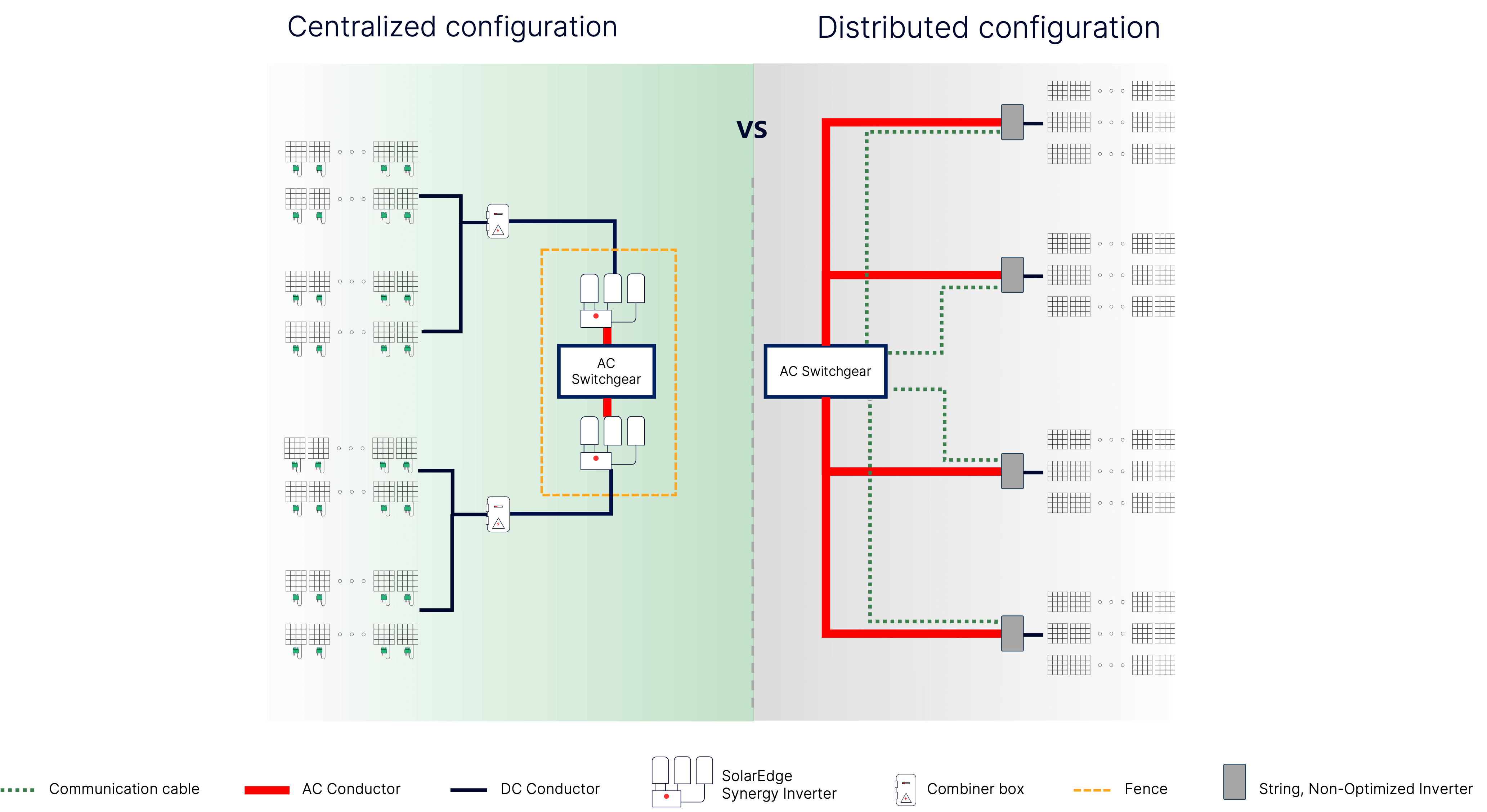
A Central configuration provides significant BoS savings when compared to a distributed setup1.
Communication Infrastructure Savings
A centralized system removes the need for extensive communication cabling and conduit, which is common in distributed commercial solar layouts.
This results in an average savings of 0.5¢/W while simplifying installation.
Longer DC Circuits, Short AC Circuits
Centralized installations favor longer DC runs and fewer AC circuits, which is advantageous in parking lot solar panel projects:
- DC circuits use 2 wires + ground
- AC circuits require 3 wires + ground
This reduces cabling needs and allows more tolerance for voltage drop, as PV Solar systems are often oversized on the DC side.
Another important aspect of running long DC circuitry is that DC circuitry usually provides more flexibility with regards to voltage loss. Voltage loss numbers in the DC side can be higher than in the AC side as PV Systems are usually designed with a higher DC power than the inverter can handle. This means there can be an excess of DC power that would otherwise be lost (in the form of DC clipping).2
On the other hand, a distributed configuration with long AC circuits needs to account for the sensitivity of inverters with voltage drop. If this is not properly designed for it can affect inverter production by creating high voltage levels that produce nuisance trips. This may develop into a situation where an oversized circuit needs to be used to reduce voltage loss in the AC circuit.2
The effect of maximizing DC circuitry and minimizing AC circuitry is in average 1¢/W
Higher Capacity PV Inverters and Reduction of Inverter Count
Reduction in inverter count: With a centralized configuration, inverter count can be reduced as larger capacity inverters can be used. In a distributed configuration, inverters are typically sized according to each canopy DC power – typical inverter sizes are 60kW AC. But, in a centralized configuration, DC combiner boxes installed at the carport canopies can be used to combine multiple small DC circuits into a large inverter, typically 120kW. Aluminum cables which are often cheaper than copper cables are used between the DC combiner boxes and the inverters, which also reduce the overall BoS costs. Thus, the net savings results from the reduction of overall BoS and inverter count by 50%.
The effect of reduction in inverter count is typically 2¢/W
In summary, the net effect of a centralized configuration is ~3.5¢/W through (this is in addition to the savings due to lower number of strings)
1. Solar Carport Optimization - Part 2, Pure Power Engineering
2. Free Voltage Drop, Pure Power Engineering
BoS Savings Summary
| BOS Savings when using Centralized Configuration | Estimated Savings |
| Communication Infrastructure | 0.5 ¢/W |
| Longer DC Circuits, Short AC Circuits | 1.0 ¢/W |
| Higher Capacity PV Inverters and Reduction of Inverter Count | 2.0 ¢/W |
| Total Estimated Savings | ~3.5 ¢/W |
Boost Efficiency for Operations & Maintenance
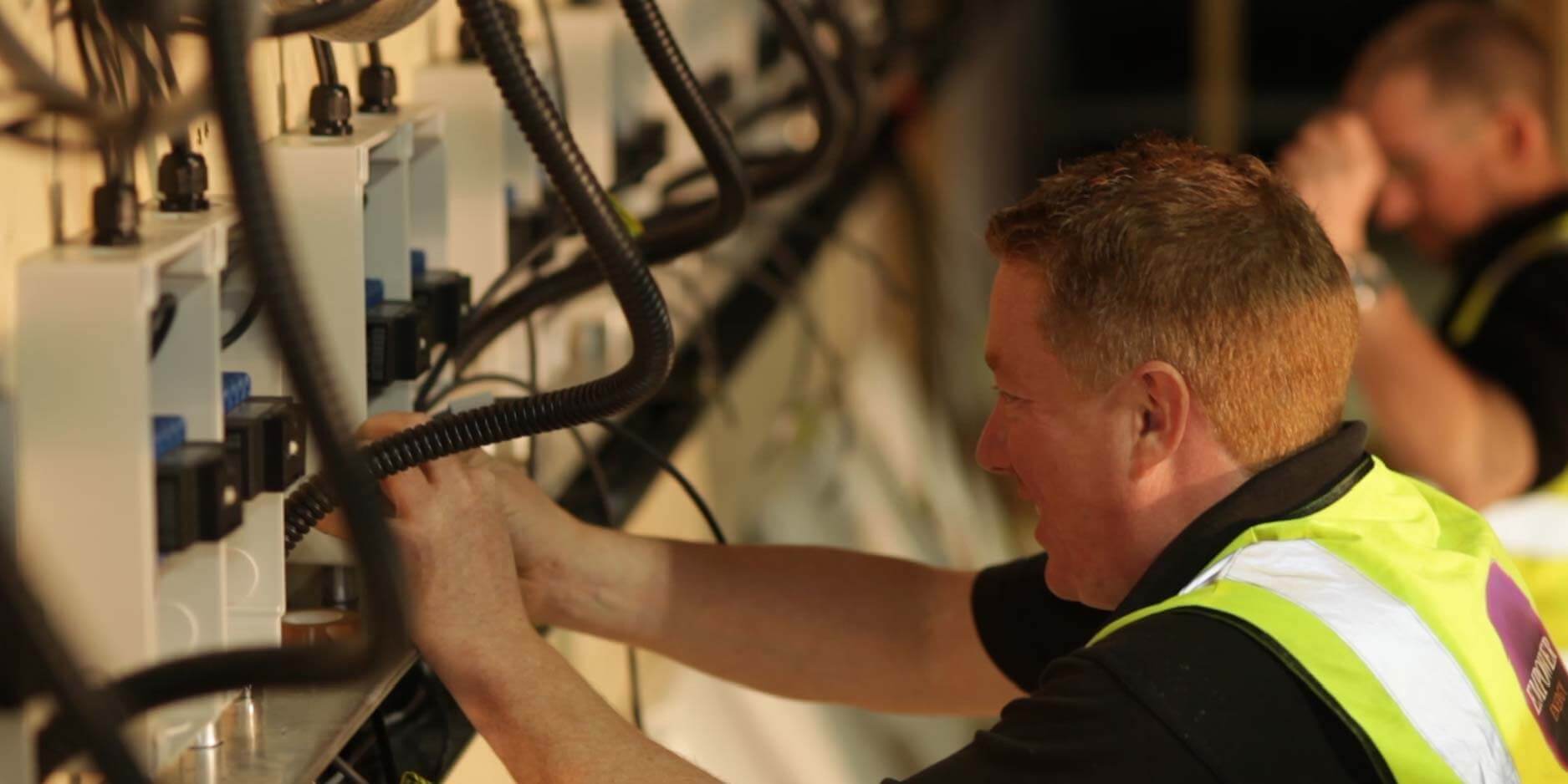
Installing inverters at a centralized location offers several advantages that enhance the efficiency and safety of both the installation and ongoing system operations. By placing all equipment in a single, central area, the installation process becomes more streamlined and organized.
This setup also simplifies access for maintenance personnel, particularly since inverters—being components that require yearly servicing—are easier to reach without the need for ladders or elevated platforms. This not only improves safety but also reduces the time and labor required for routine checks and repairs.
Additionally, centralized inverter placement typically involves securing the equipment in a protected area, such as within a fenced area or mounted on a wall near the electrical room. This strategic positioning not only ensures the safety of the equipment from environmental exposure but also provides a layer of protection against vandalism or unauthorized access. Overall, this approach supports a more efficient, safe, and manageable system for both installation and long-term operation and maintenance.
Module-Level Monitoring
SolarEdge’s DC-Optimized architecture offers significant advantages for the operation and maintenance of solar facilities. One of the key features is module-level monitoring, which enables continuous and granular data collection across the entire DC array. This level of visibility allows asset managers to perform virtual daily flyovers, providing a comprehensive, real-time view of system performance. With real-time monitoring, issues can be identified and addressed much more quickly, significantly reducing the time between detection and resolution.
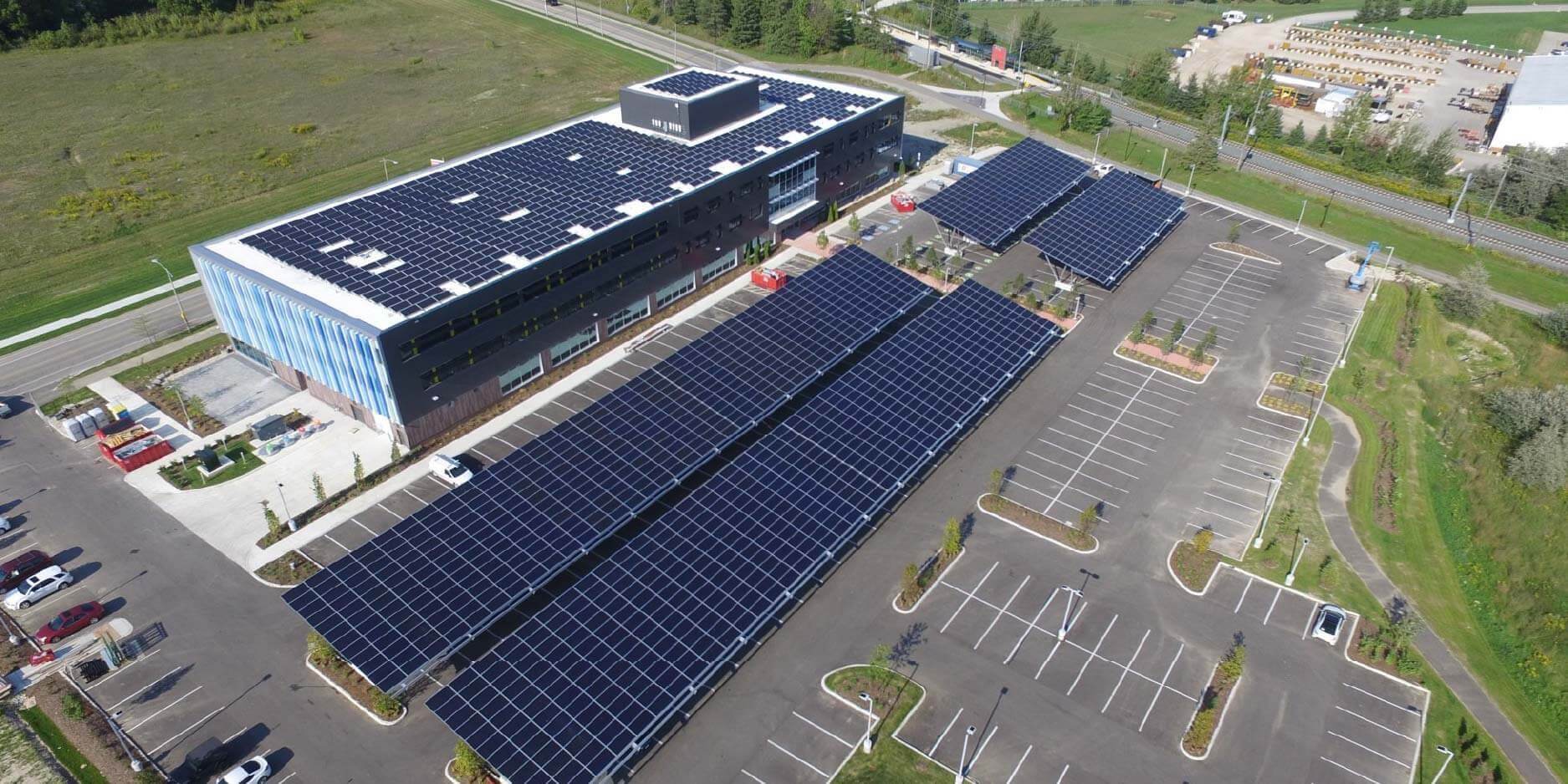
Build Solar Safety into Your Carport Project
The SafeDC feature is designed to enhance the safety of photovoltaic (PV) systems by rapidly reducing DC voltage to touch-safe levels. In the event of a fault—whether at the array or system level—SafeDC automatically lowers the system’s DC voltage within five minutes. This quick response significantly reduces the risk of electrical shock, making the environment safer for maintenance personnel and first responders.
Specifically, in the case of a ground fault or arc fault, the system ensures that the array remains at a safe DC voltage level. Additionally, current flow through the strings is halted until qualified personnel arrive on site. This proactive safety mechanism not only protects individuals but also helps prevent further damage to the system, supporting both operational safety and system longevity
Conclusion
Centralized configurations for parking lot solar panel and carport solar projects deliver measurable advantages:
- Lower costs via reduced BoS infrastructure and fewer inverters
- Simplified operations and maintenance with inverters co-located in a central location
- Safer installations with inverters and main equipment in a fenced location
When paired with SolarEdge’s solar optimizer and SafeDC™ technology, centralized designs become a cornerstone of efficient, scalable, and secure commercial solar energy systems.
Key Benefits Summary
- Up to 50% BoS cost reduction
- Faster installation in commercial solar deployments
- Safer and more secure PV inverter access
- Enhanced solar safety with SafeDC™
- Smarter monitoring with solar optimizer technology
- Streamlined servicing of parking lot solar panel infrastructure
FAQs
Is centralized configuration unique to SolarEdge design?
No. However, the SolarEdge DC Optimized architecture design does provide unique benefits when compared to string inverters and they are: fewer strings reducing DC BOS costs, module level monitoring and voltage shutdown during ground and arc faults.
Is centralized better for large-scale solar carports?
Yes. For most commercial solar sites, centralized layouts reduce cost, improve safety, simplify access, and improve monitoring.
Does this help reduce inverter maintenance time?
Absolutely. Centralized PV inverters are easier to service, often without lifts or ladders, lowering O&M costs significantly.
What if there’s a ground or arc fault in the system?
SolarEdge’s SafeDC™ technology ensures solar safety by rapidly de-energizing the system for maintenance or emergency response.
Does a centralized configuration mean losing a parking space?
Not necessarily! Several of our customers have designed a centralized configuration placing the inverters on the building wall by the electrical room and AC switchgear.