
MLPE for Carport and Ground Mount PV Projects: A Skeptic's Reversal

Table of contents
- Introduction
- Insight 1: Power Optimizers feel unnecessary, but the fixed voltage...
- Insight 2: The fear of a single optimizer failure, but the failures are rare, and maintenance...
- Insight 3: Power Optimizers feel too expensive in CapEx, but they add...
- Insight 4: The upfront cost isn't the only important point, there's...
- Conclusion
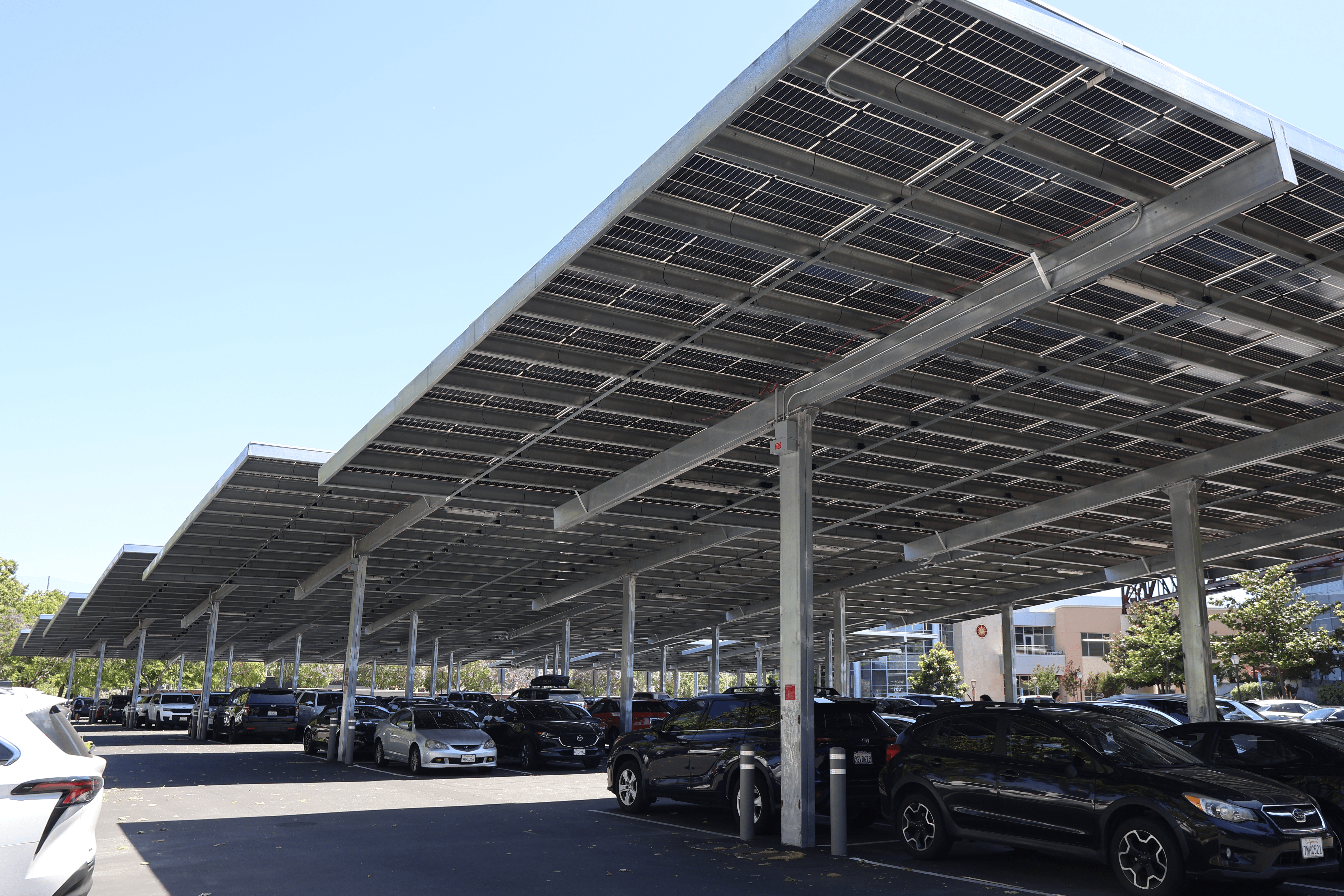
For nearly a decade, I worked as an engineer for a solar developer and EPC, designing commercial and ground mount projects. The systems needed to meet three basic criteria: they had to be safe, financeable, and competitive on day one. Like most people in those roles, I was trained to be skeptical of anything that added cost, complexity, or perceived risk.
After transitioning into my current role at SolarEdge I realized that some of the assumptions I relied on were incomplete and that’s what I wanted to discuss here. This isn’t an argument that one architecture fits every project, and it’s not a sales pitch.
It’s a reflection on a few blind spots I carried for years, and that I still see frequently among developers, asset owners, and decision makers evaluating Power Optimizer based systems on carport and ground mount projects up to roughly 20 MW.
What changed my perspective wasn’t theory. It was seeing actual system performance.
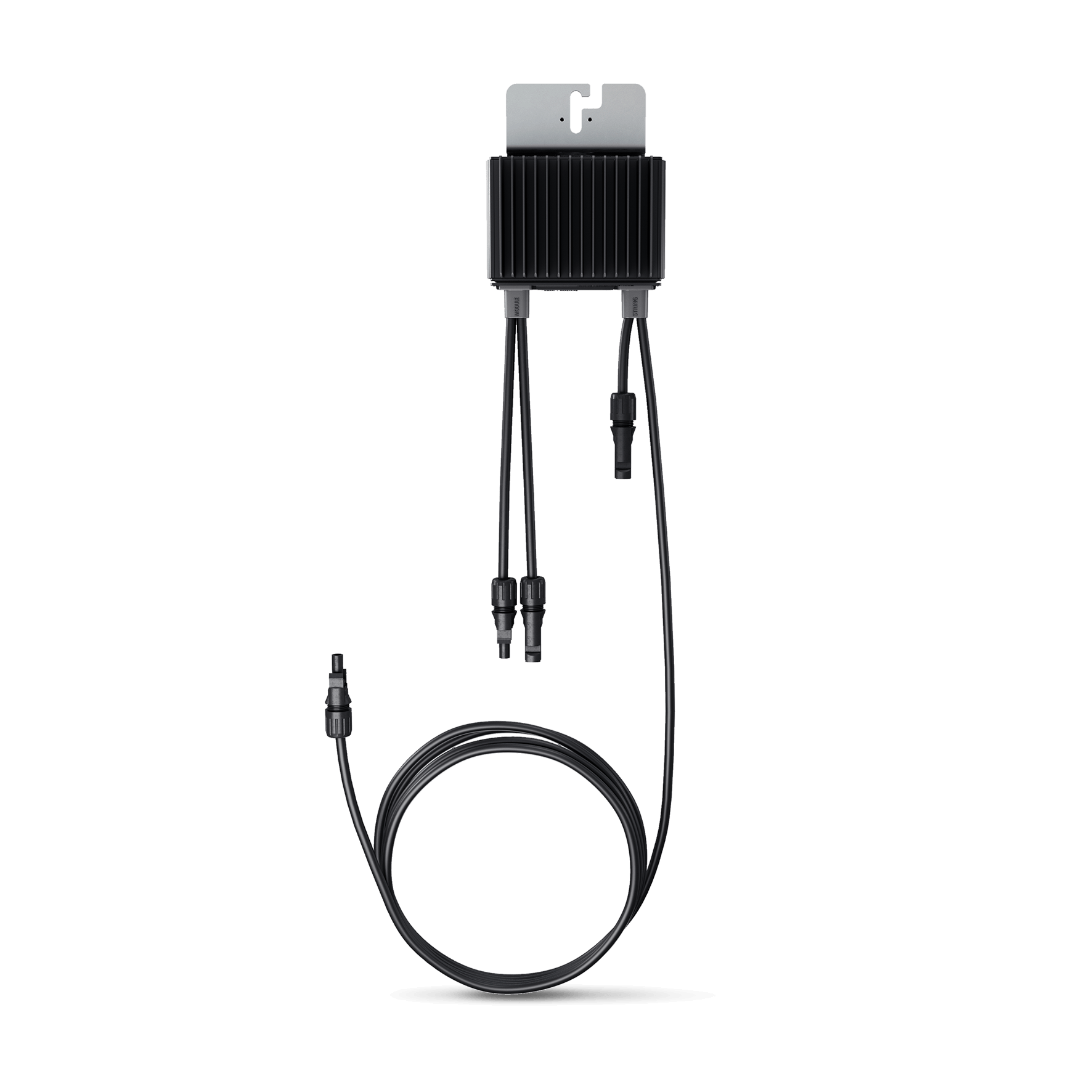
SolarEdge Power Optimizers are module level power electronics (MLPE). They function as DC-DC converters, connected to every two PV panels onsite to ensure maximum production at the panel level. Our Power Optimizers increase overall system yield and revenue by tracking the maximum power point of each individual panel and providing panel-level performance data, while ensuring maximum system safety through unique safety features.
Insight 1: Power Optimizers feel unnecessary, but the fixed voltage architecture they enable lowers cost
Whether the project is a carport or a ground mount site, the initial reaction to Power Optimizers tends to be similar. They feel unnecessary when shading is limited. They add components. They cost more upfront. And on paper, traditional string inverters appear simpler and easier to justify.
That thinking makes sense, especially when designs are evaluated on cost first. On a clean layout with uniform modules, it’s easy to assume performance will average out and operations will take care of itself. I made that assumption for years.
What I didn’t fully appreciate at the time was how much the electrical architecture changes when you’re no longer constrained by traditional string design.
Power Optimizers incorporate fixed-voltage architecture, which allows for significantly longer strings, which directly reduces homeruns, trenching, combiner counts, and copper.
On larger carport projects, those reductions on the DC side can be substantial.
BoS Cost Comparison: SolarEdge versus Traditional String Inverter (1.27MWdc Carport)
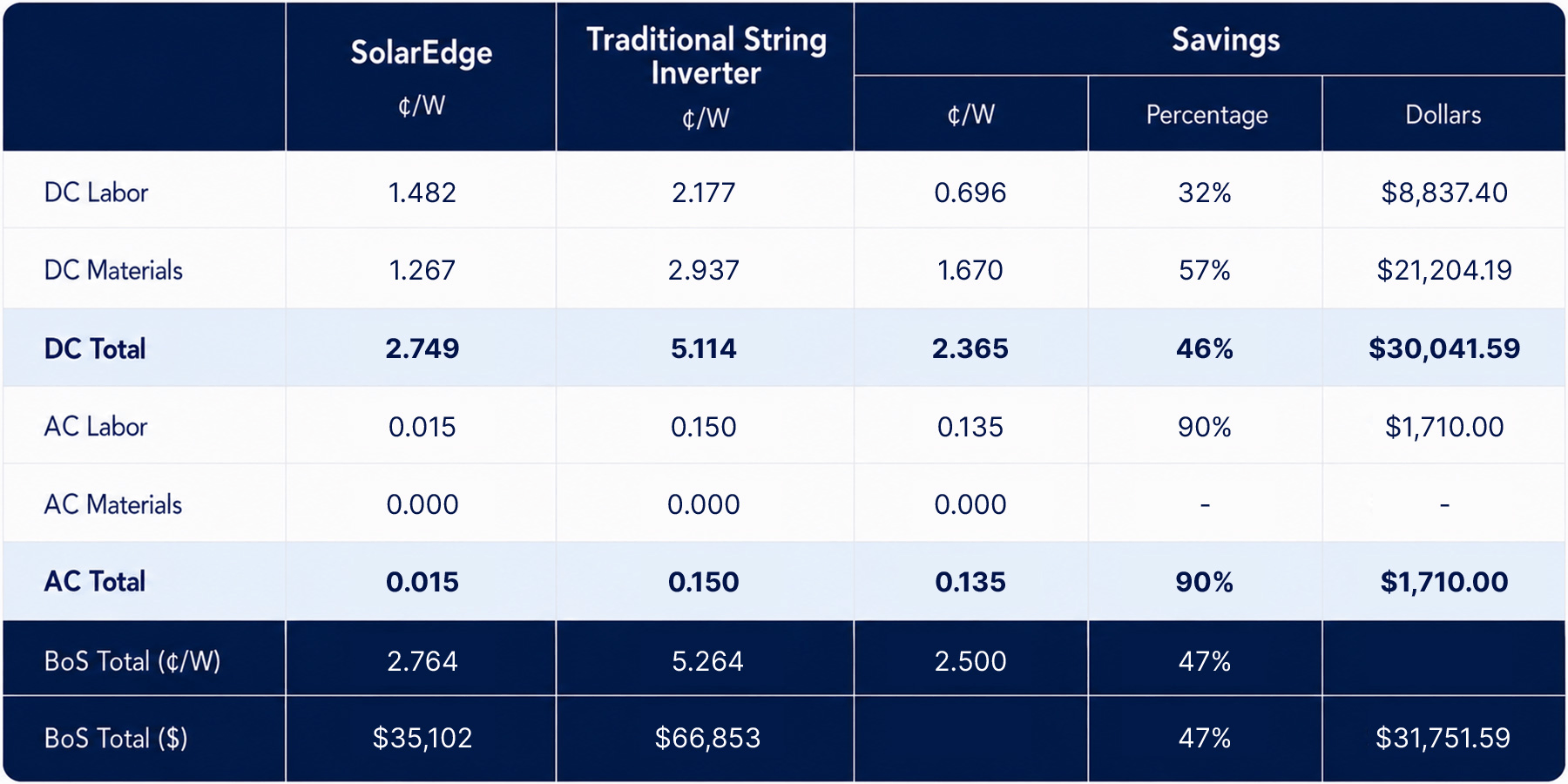
*Comparison primarily on the DC design. Inverters and all AC components mounted in a centralized formation at the same location
*Labor rates based on $95/hr for Specialized Electrical and $75/hr for General labor
BoS Cost Comparison: SolarEdge versus Traditional String Inverter (1.45MWdc Ground Mount)
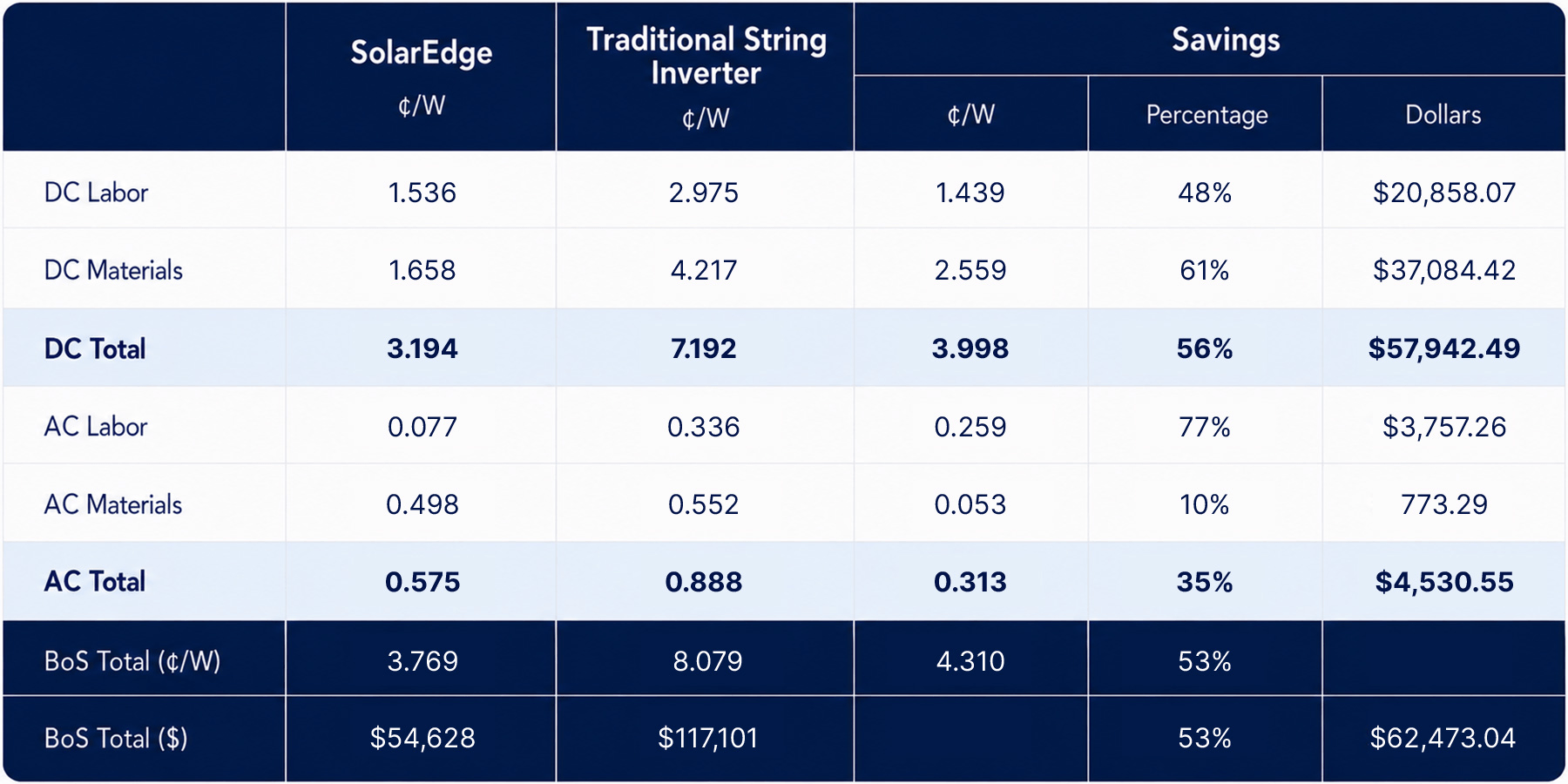
*Comparison primarily on the DC design. Inverters and all AC components mounted in a centralized formation at the same location
*Labor rates based on $95/hr for Specialized Electrical and $75/hr for General labor
Beyond installation, the module level visibility enabled by Power Optimizers changes how systems are operated. Instead of periodic drone scans or IV curve testing to find underperformance, issues can be identified remotely and precisely. When you consider how often underperforming systems go unnoticed or unresolved for months at a time, the installation cost starts to look less like a premium and more like an operational investment.
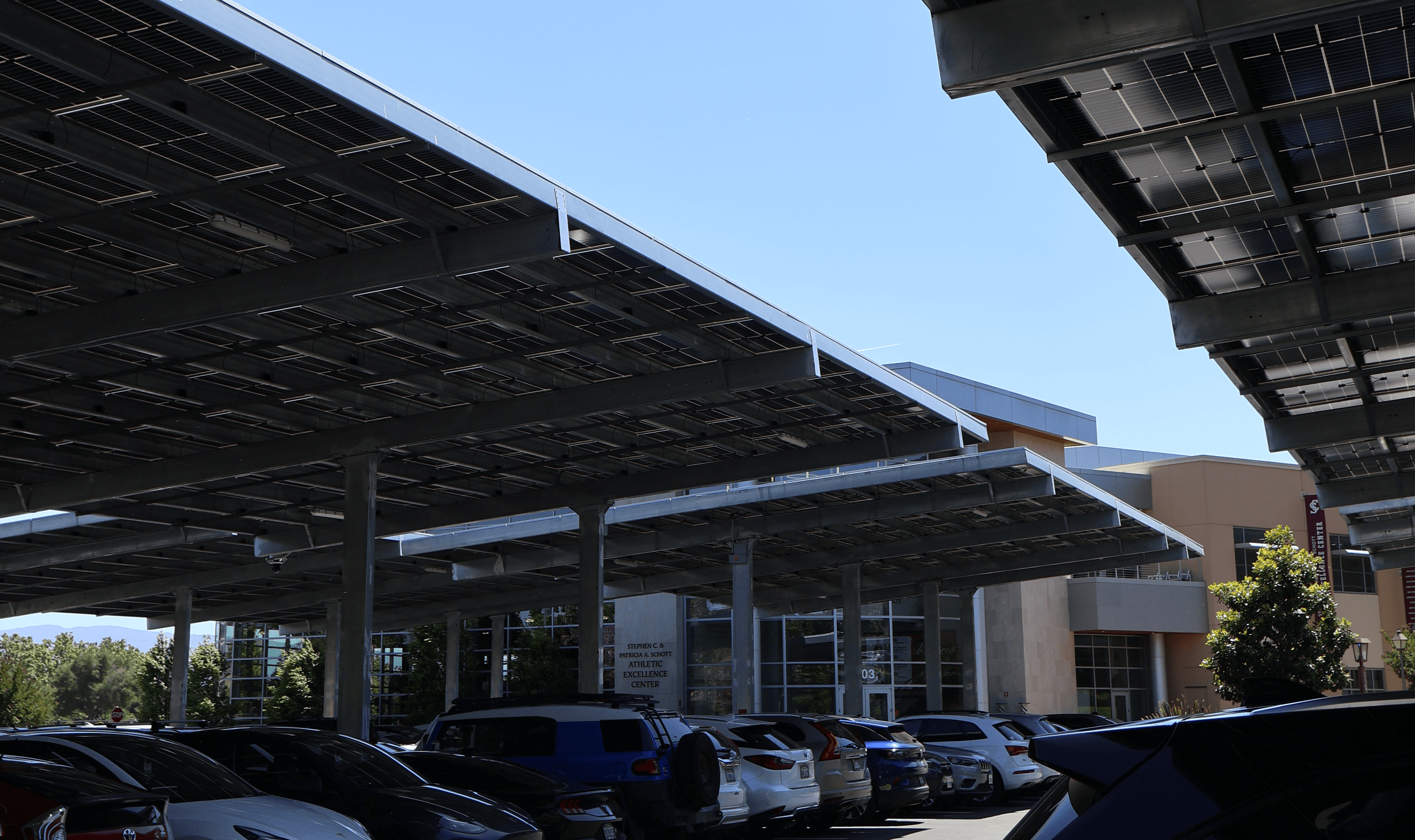
Carports are often viewed as a special case. They’re vertical, access is expensive, and the expectation is that designs should be as simple as possible. Ground mount systems, particularly in the 5–20 MW range, are assumed to be the opposite: flat, repeatable, and inherently optimized through scale.
In practice, both behave more similarly than you’d expect.
Carports experience uneven soiling, edge shading, thermal gradients, and access limitations that make troubleshooting expensive. Ground mount systems experience undulating terrain, tracker behavior, row to row variability, construction inconsistencies, and subtle shading that changes seasonally. None of these appear meaningfully in a spreadsheet, but they all show up in production data.
Traditional string architectures are forced to respond to these issues at the string or inverter level, penalizing energy production for the whole string or system. Power Optimizers respond at the module level, which changes both how losses manifest and how quickly they can be addressed. Losses are constrained to the affected modules instead of the whole string and monitoring pinpoints issues.
Fixed string voltage system designs also alter how arrays are laid out in the first place. On both carports and ground mount sites, longer strings translate directly into fewer homeruns, less trenching, smaller wire counts, and simpler DC infrastructure. On projects approaching 20 MW, DC wire reductions alone can materially change installed cost. That reality often gets lost when the conversation centers exclusively on added electronics instead of removed copper.
Benefits of Longer Strings
Insight 2: The fear of a single optimizer failure, but failures are rare, and maintenance becomes planned
One of my biggest concerns as a developer was maintenance risk. The thought of a single Power Optimizer failure triggering a truck roll or lift rental felt like a non starter, especially on carports and remote ground mount sites. On carports, where access is vertical and equipment isn’t cheap, that scenario feels expensive very quickly. What changes this conversation is data. Power Optimizer failure rates are extremely low. Plus SolarEdge has created the AdvantEdge Power Protection Program which protects PV system stakeholders against revenue loss caused by potential Power Optimizer downtime.
How the AdvantEdge Program works:
With the granular monitoring from the Power Optimizers, replacements don’t have to be reactive. They can be identified, batched, and addressed during scheduled maintenance events at times when lifts are already mobilized for inverter service or inspections.
Instead of emergency truck rolls, maintenance becomes planned and predictable, which is exactly what long term asset owners want. From an asset owner's standpoint, predictability and visibility is often more valuable than theoretical simplicity.
Insight 3: Power Optimizers feel too expensive in CapEx, but they add to the energy yield over the asset's life
From a developer lens, this was probably my strongest bias. Power Optimizers cost money, and on paper, a traditional string inverter looks simpler and cheaper. Mismatch, degradation, soiling, and light shading were things I assumed would average out across large systems.
In practice, they don’t average out nearly as cleanly as spreadsheets suggest. Module mismatch, uneven aging, microcracks from shipping or installation, intermittent shading, soiling variation, and even bifacial imbalance all happen at the module level. Traditional string inverters have limited ability to respond to those realities.
20 Year Energy Value Comparison for a 1.27MWdc Carport
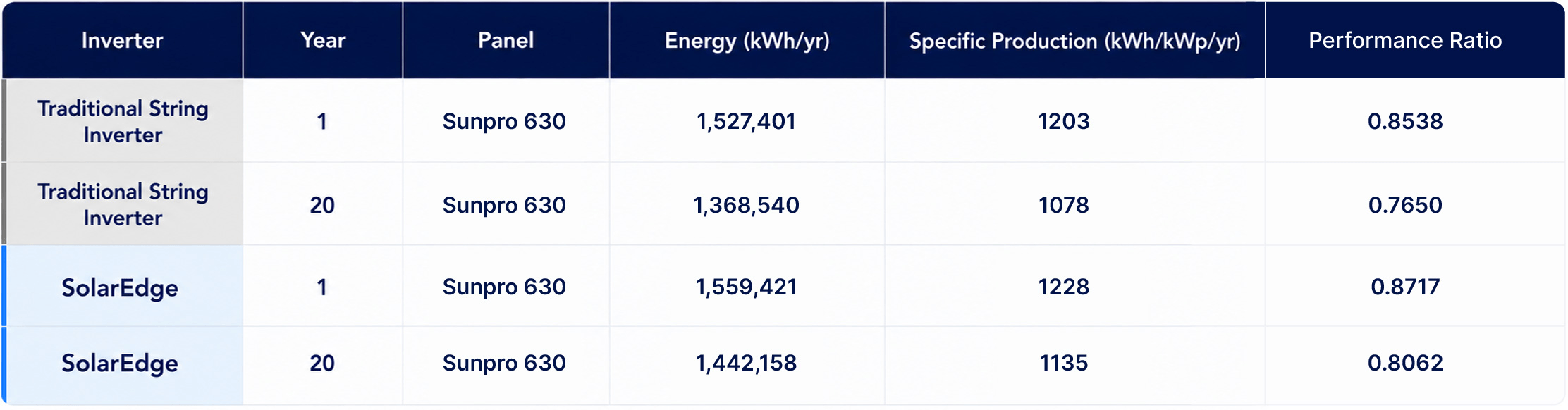
Production Comparison for Year 1 vs. Year 20

*Energy Production calculations based on module mismatch, degradation, soiling, and light shading location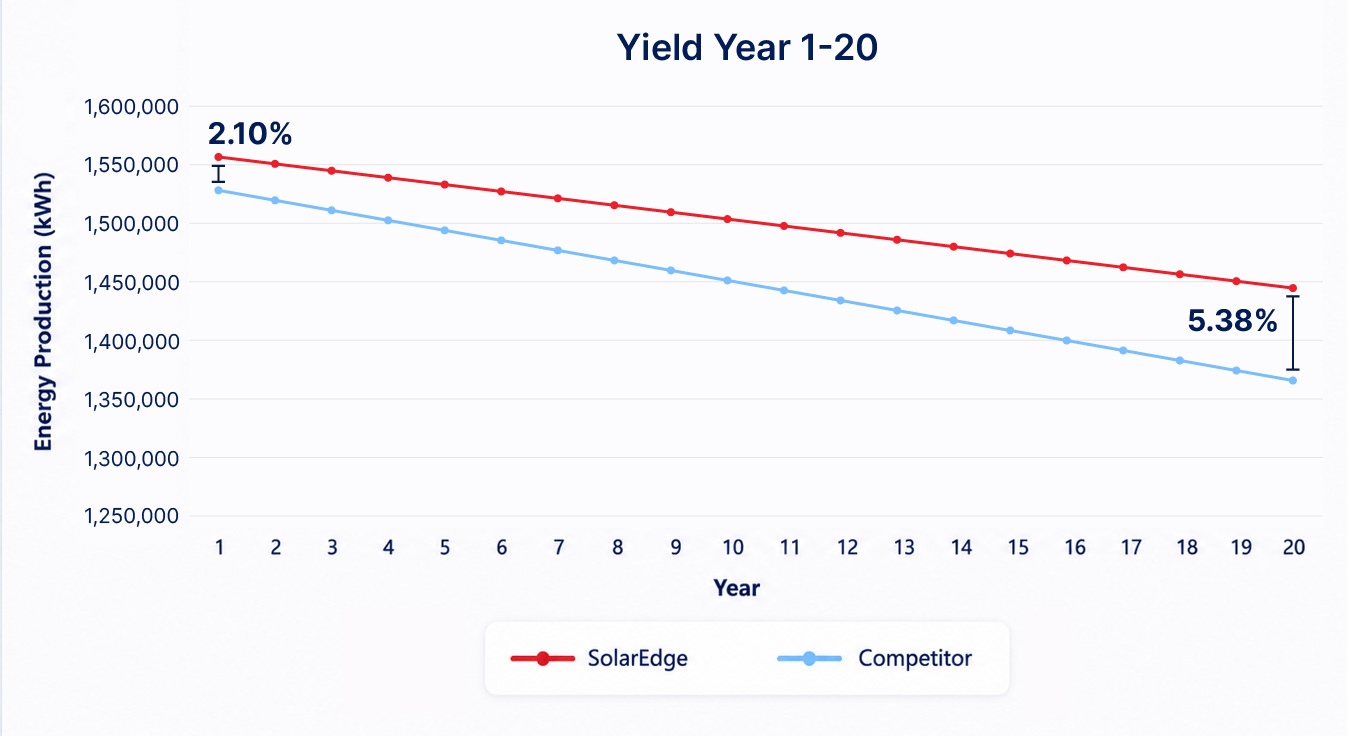
3.68% of production difference over 20 years translates to a 3.49% Energy Revenue Gain and Total NPV of $88,625.
*. NPV calculations based on $0.12/watt Utility rate, 3% Annual Escalator and 6% Discount Rate
20 Year Energy Value Comparison for a 1.45MWdc Ground Mount
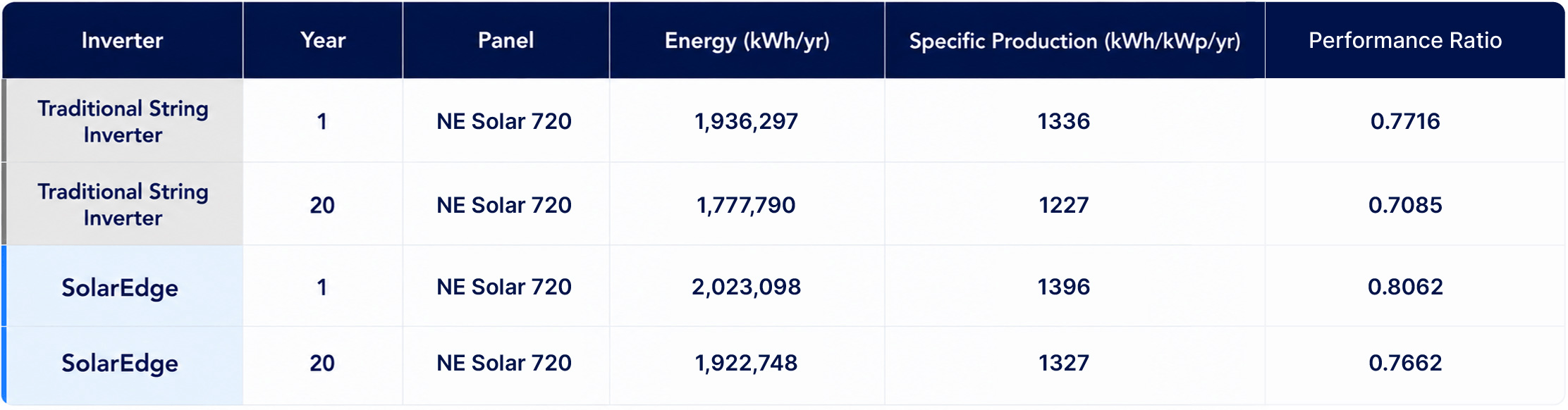
Production Comparison for Year 1 vs. Year 20

*Energy Production calculations based on module mismatch, degradation, soiling, and shading typical for a community solar ground mount array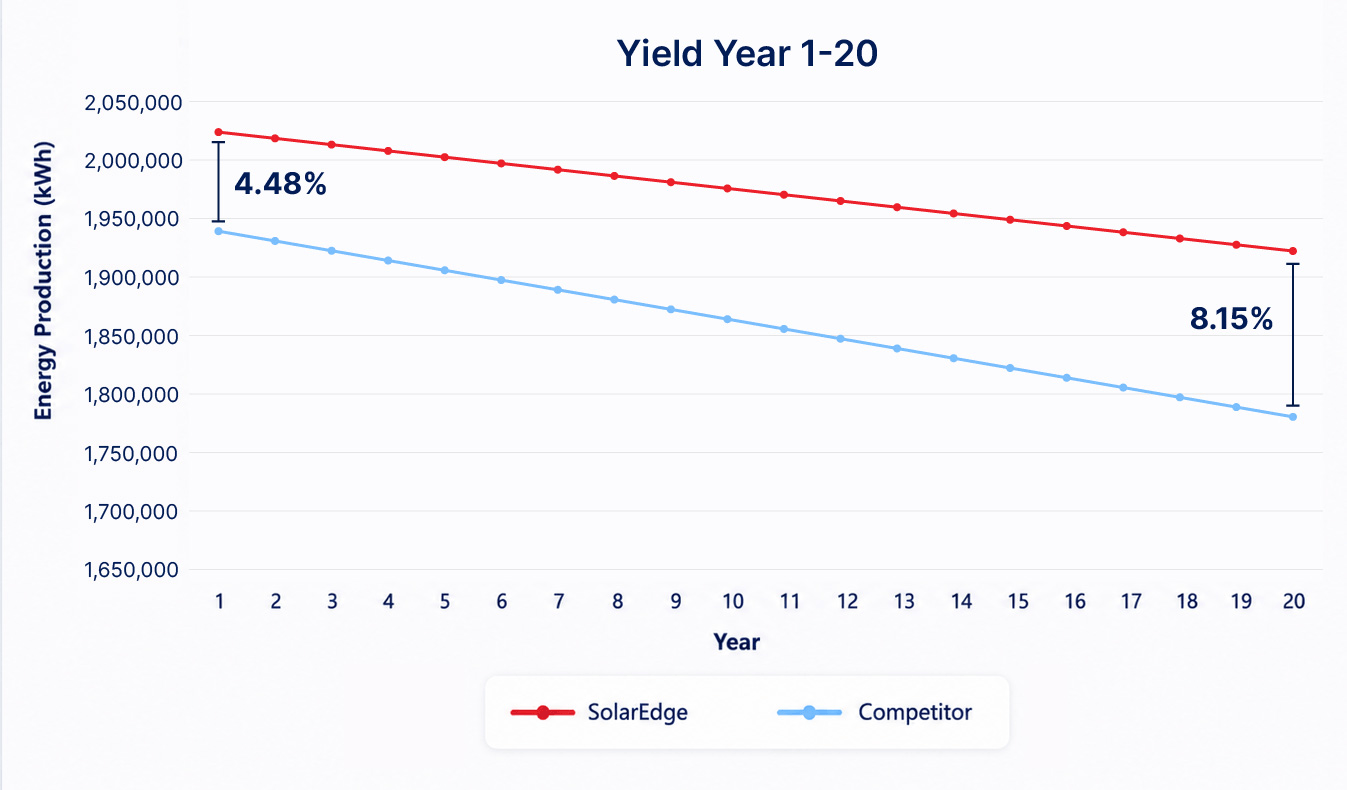
6.29% of production difference over 20 years translates to a 6.08% Energy Revenue Gain and Total NPV of $197,955.
**. NPV calculations based on $0.12/watt Utility rate, 3% Annual Escalator and 6% Discount Rate
Over a 20- to 25-year asset life, recovering even a few percent of additional energy starts to matter, especially in a market where energy prices continue to rise. Just as importantly, knowing exactly where performance issues exist reduces the time and labor spent diagnosing problems in the field. Less time hunting for problems means faster fixes, lower field labor costs, and higher system availability.
At scale, higher energy harvesting is not an abstract concept. It is revenue. Across the life of the system, the typical energy-generation gain can reach up to 10%.
Insight 4: The upfront cost isn’t the only important point, there’s long-term value
On Carports and Ground mounts, optimizer based systems typically carry a slight upfront premium compared to traditional string inverters. When I was on the developer side, that alone was often enough to end the discussion. When projects are evaluated purely on initial CapEx, that value is easy to miss. But, when they’re evaluated across the full lifecycle, the math starts to look different.
What I didn’t consider enough was how value accrues differently across stakeholders. EPCs can benefit from reduced electrical BOS and simpler layouts. Developers benefit from higher modeled and realized energy, which strengthens the investment narrative.
For long term owners and O&M providers, granular monitoring reduces labor hours, shortens average time to repair, and improves availability.
When projects are evaluated solely on first cost, those benefits are easy to dismiss. When they’re evaluated across a 20 to 25 year lifecycle, the tradeoffs look very different.
Closing thoughts
Some may view this perspective as biased given where I work today, and that’s understandable. I shared many of these same assumptions for most of my career. The shift for me wasn’t philosophical or brand driven. It came from seeing long term operational data, system behavior and familiarity with products that I hadn’t previously been exposed to on the developer side.
Whether a project is a carport or a ground mount system, the underlying question is the same: are we optimizing solely for commissioning day, or for predictable performance over the life of the asset? That question is what ultimately changed how I look at system architecture.
As engineers and decision makers, we’re conditioned to optimize for efficiency, safety, and bankability under tight cost constraints. That discipline is essential. But as portfolios grow and assets age, blind spots emerge if first cost becomes the only lens we use for long-term.
Frequently Asked Questions
1. Why consider Power Optimizers when a project has limited shading?
Even when shading appears minimal, module-level differences such as uneven soiling, thermal variation, mismatch, and construction inconsistencies can reduce output. Power Optimizers address these issues at the module level while enabling fixed-voltage architecture, which can reduce homeruns, trenching, combiner counts, and copper.
2. How do Power Optimizers help reduce installation costs?
Power Optimizers support a fixed-voltage design that allows for significantly longer strings. Longer strings can mean fewer homeruns, less trenching, smaller wire counts, and simpler DC infrastructure, which can offset some of the upfront cost of adding module-level power electronics.
3. Do Power Optimizers increase maintenance risk?
Maintenance risk is lower than expected because optimizer failure rates are extremely low and issues can be identified through granular monitoring. Rather than triggering emergency truck rolls, replacements can often be grouped into scheduled maintenance events. Plus there is the AdvantEdge Power Protection Program which protects PV system stakeholders against revenue loss caused by potential Power Optimizer downtime.
How it works:
/ Every Power Optimizer at an eligible site is covered
/ Coverage runs for a two-year period from enrollment
/ Each Power Optimizer is covered for up to six months of production loss
4. What is the long-term value of module-level monitoring?
Module-level monitoring helps asset owners and O&M teams identify performance problems quickly and remotely. This can reduce diagnostic time, shorten repair cycles, improve availability, and help maximize energy production over the system lifetime.


